 The Civil Rights Movement dismantled the restrictive and racist laws of the 1960s Jim Crow era that enforced racial segregation and disenfranchised African Americans, primarily in the South. These laws enforced "separate but equal" status, resulting in inferior public facilities and systemic racism, making Black people second-class citizens.
 Bridges was born during the middle of the Civil Rights Movement. Brown v. Board of Education was decided shortly before Bridges’ birth, declaring that the establishment of separate public schools for white children, which black children were barred from attending was unconstitutional; the court ruled that black students were permitted to attend such schools. Though the Brown v. Board of Education decision was finalized in 1954, southern states were strongly opposed to the decision that they must integrate within six years.
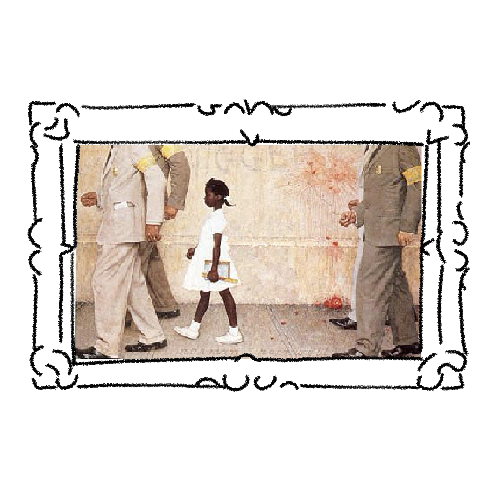 Secondary souce: Norman Rockwell’s "The Problem We All Live With" depicts Bridges’ historic walk into William Frantz Elementary School on November 14, 1960. The scene is depicted at her height to highlight this experience from her perspective; slurs and tomatoes can be seen in the painting’s backdrop to highlight the discrimination she experienced at a young age. [CLICK HERE FOR EXCERPTS FROM ARTICLE]
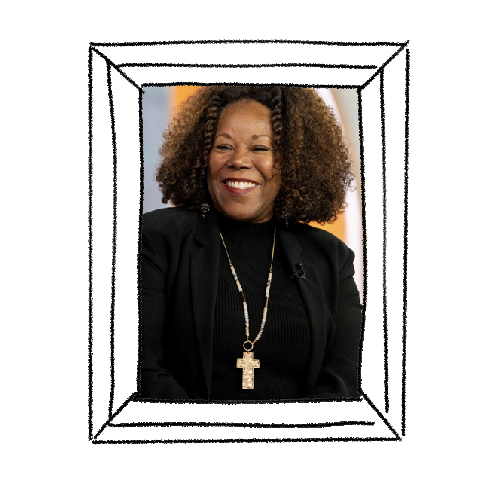 [CLICK HERE FOR ABOUT RUBY BRIDGES + CONNECTION TO TO KILL A MOCKINGBIRD]
 Secondary souce: Womenshistory.org's article on Ruby Bridges. [CLICK HERE FOR EXCERPTS FROM ARTICLE]
 Primary source: A photograph of Ruby Bridges being escorted into William Frantz Elementary School by U.S. Marshals in November of 1960. [CLICK HERE FOR ANALYSIS]
 Primary source: Through My Eyes (1999) - Ruby Bridges' autobiography. [CLICK HERE FOR ANALYSIS]
 Primary source: I Am Ruby Bridges (2022) - A picture book illustrated by Nikkolas Smith that tells her story from a child's perspective.